Vuulcan Refractories is a castable-first refractory brand founded by a team with over 20 years of hands-on experience in Zibo's refractory manufacturing industry. Established in 2024, Vuulcan provides international buyers with a single technical and commercial interface to the cluster's alumina-silica refractory capability — from low-cement castables and insulating firebrick to high-alumina brick and ceramic fiber products.
We did not enter refractories from the outside. We grew up in this industry — then built a brand around the manufacturing knowledge, supplier relationships, and formulation judgment we had earned on the factory side.
China produces over 65% of the world's refractory materials. Within China, Zibo — in Shandong province — is one of the country's oldest and most concentrated refractory manufacturing regions, with roots in industrial ceramics dating back to the 1950s and over 200 refractory manufacturers operating today.
Unlike the high-volume, price-driven clusters in Henan province, Zibo's refractory sector is characterized by export orientation, alumina-silica system specialization, and a complete local supply chain from raw material processing through finished product testing.
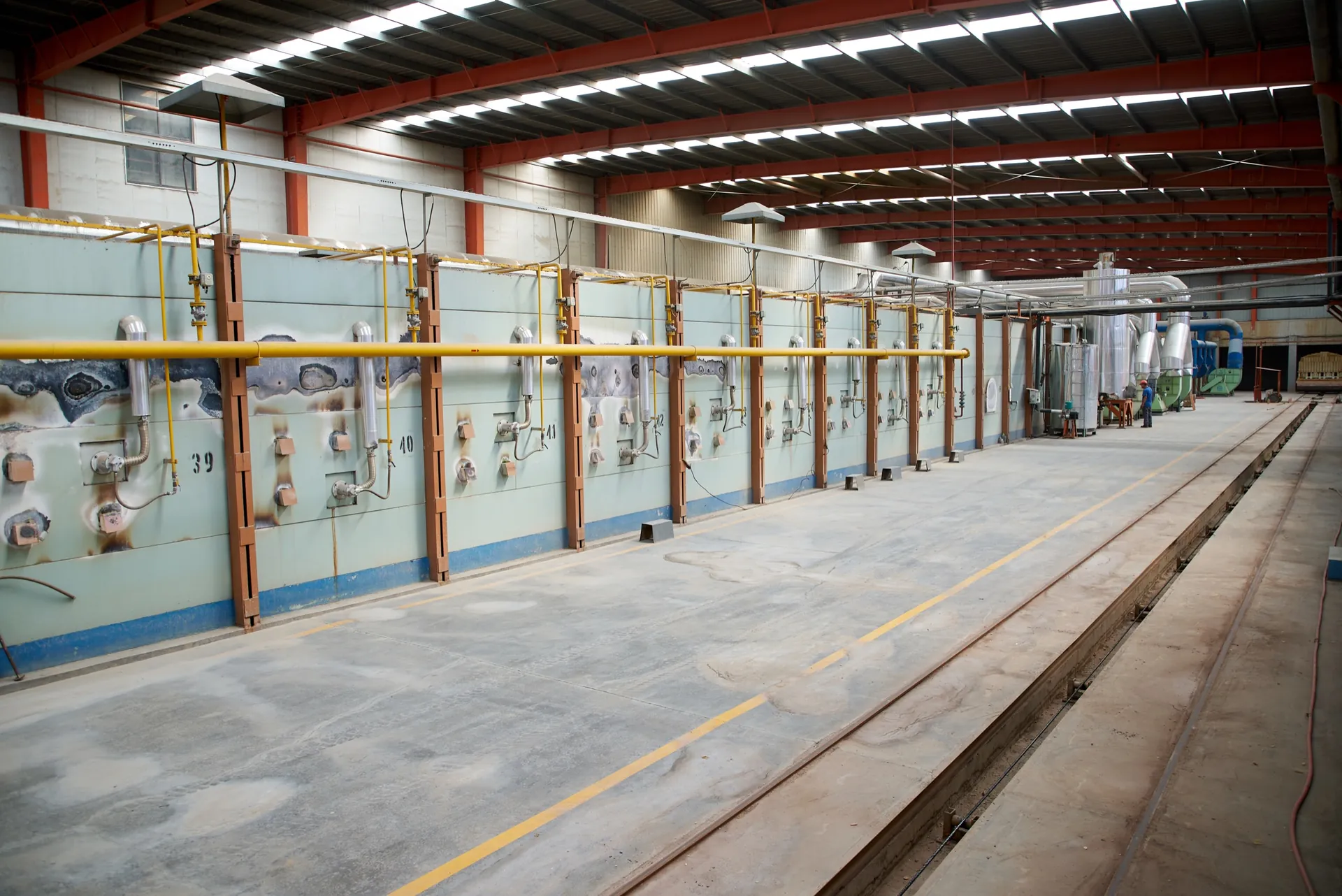
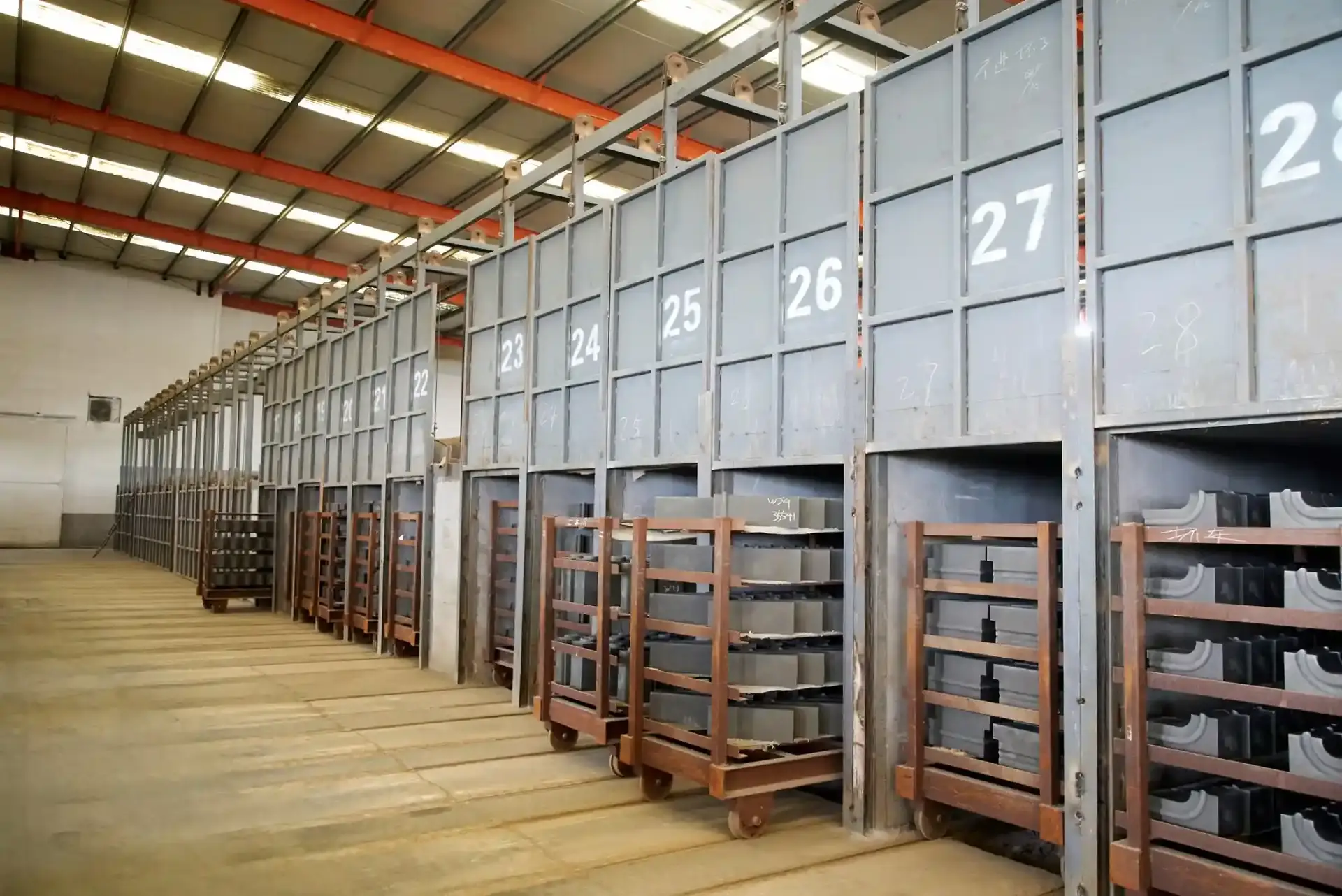
From bauxite and clay processing to finished product testing and export packing — the entire refractory manufacturing chain is concentrated within a 100 km radius in and around Zibo. Raw material → batching → forming → firing → quality control → export packaging.
Zibo refractory manufacturers have been exporting since the 1980s — over 40 years of international trade experience. Export packing standards, container-loading efficiency, and third-party inspection protocols are mature and well-practised across the cluster.
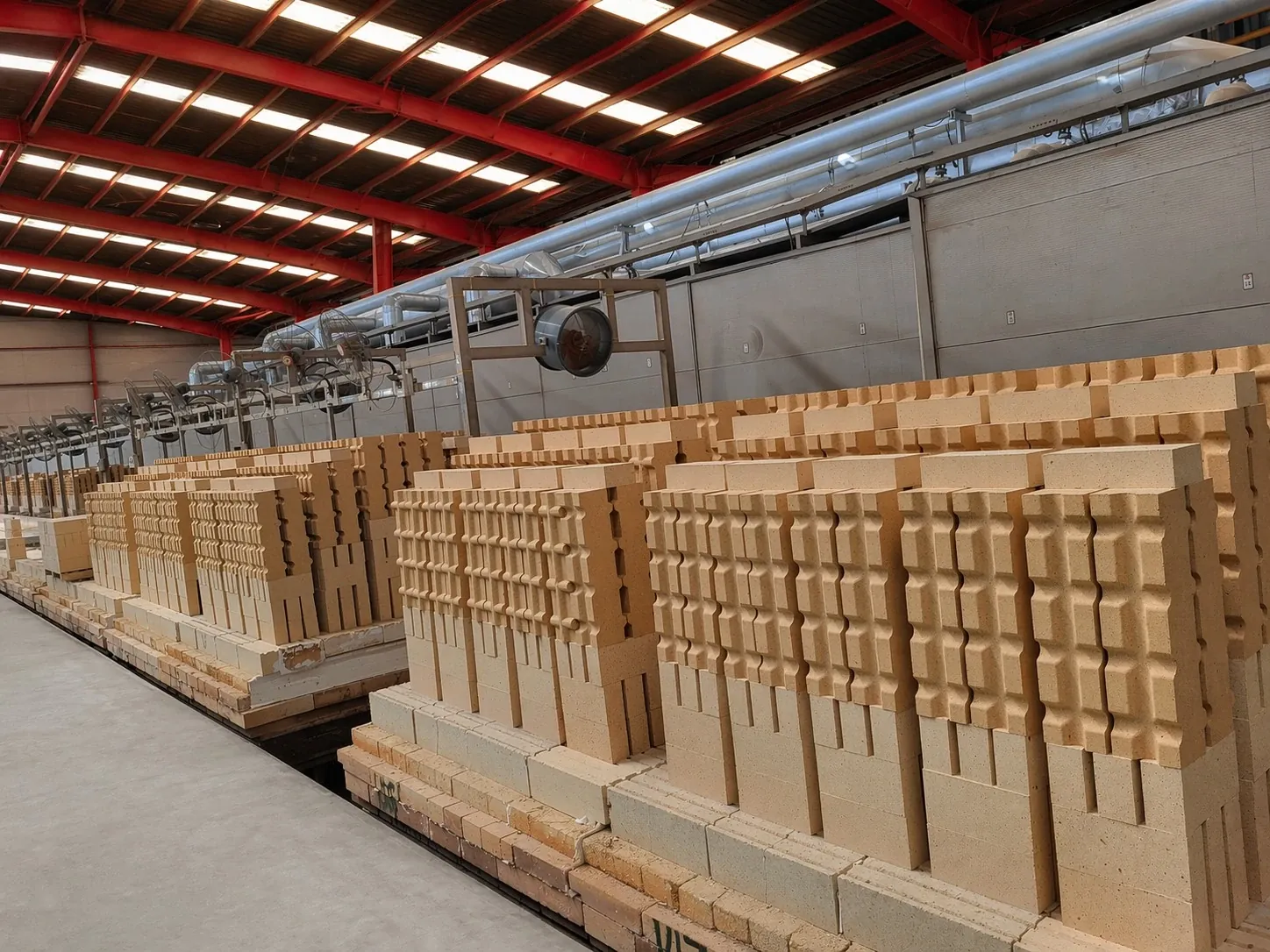
Zibo's core competence is the alumina-silica refractory system: castables, high-alumina brick, insulating firebrick, and precast shapes. Magnesia-based products are Liaoning's territory. Zibo does what it does best — and Vuulcan sources exclusively within that strength.
Independent third-party testing laboratories and in-house factory labs provide full analytical capability: chemical analysis, cold crushing strength, thermal shock resistance, bulk density, apparent porosity, and refractoriness-under-load testing.
Vuulcan Refractories was not built by outsiders looking in. Our founding team's experience began inside Zibo's refractory manufacturing facilities — on production lines, in kiln control rooms, and in quality laboratories. We learned this industry from the raw material stage, not from a product catalogue.
Our own manufacturing background goes back to around 2000. We have operated production lines, managed firing schedules, and personally experienced the consequences of formulation errors and quality shortcuts. This is insider knowledge — not acquired through sourcing, but earned through making.
We saw the same problem from inside that international buyers see from outside: China produces the world's best-value refractory materials, but the gap between factory capability and buyer experience is enormous. Language barriers. Inconsistent quality documentation. No engineering support after shipment. No brand accountability. Vuulcan was built to close that gap — by people who understand both sides.
"Before the brand came the kiln line. Our understanding of refractory materials did not begin in an export office. It began beside kilns, raw material systems, and quality control benches in Zibo."— Vuulcan Refractories · Founding Principle
Vuulcan Refractories operates as the buyer-facing technical and commercial interface for refractory manufacturing capability within China's Zibo cluster. We manage product-by-product supplier qualification, quality oversight, and export coordination — so buyers get a single point of accountability with the manufacturing depth of an entire production region behind every order.
Our supplier relationships in the Zibo cluster are not transactional. They are built on years of shared industry history, mutual trust, and firsthand knowledge of each facility's strengths, limitations, and quality track record.
Most refractory exporters from China present themselves as "full-range suppliers" — listing every product category from magnesia-carbon brick to ceramic fiber. In practice, this means no specialization, no engineering depth, and no accountability for lining system performance.
Vuulcan starts with the castable. Low-cement castables, ultra-low-cement castables, self-flow castables, and precast shapes — these are the products where formulation engineering, raw material quality, and installation guidance directly determine kiln lining lifetime. Getting the castable right is the hardest part. Everything else follows.
This doesn't mean we only sell castables. It means every product recommendation starts from the castable system outward — insulating firebrick, high-alumina brick, ceramic fiber — each selected to work with the castable, not independently of it. Castable-First is not a product limitation. It is an engineering logic.
Our quality framework was designed by people who have operated refractory production lines, managed kiln firing schedules, and personally experienced the consequences of formulation errors and quality shortcuts. This is oversight built from manufacturing knowledge — not from a trading company checklist.
Factory audit against Vuulcan QC scorecard. Production capability, equipment condition, testing infrastructure, quality records, and export track record.
Raw material sourcing verification. Particle size distribution, binder system, and aggregate quality confirmed against application requirements.
Chemical analysis + physical property testing per batch: bulk density, apparent porosity, cold crushing strength, thermal shock resistance.
Full inspection before loading: appearance, dimensions, packaging integrity, marking accuracy, quantity verification.
Every shipment: chemical analysis report, physical property report, packing list, loading photos, material traceability certificate.
Share your kiln type, service temperature, and current lining challenges. Our team will recommend a castable system and prepare a technical proposal — typically within 6 hours.