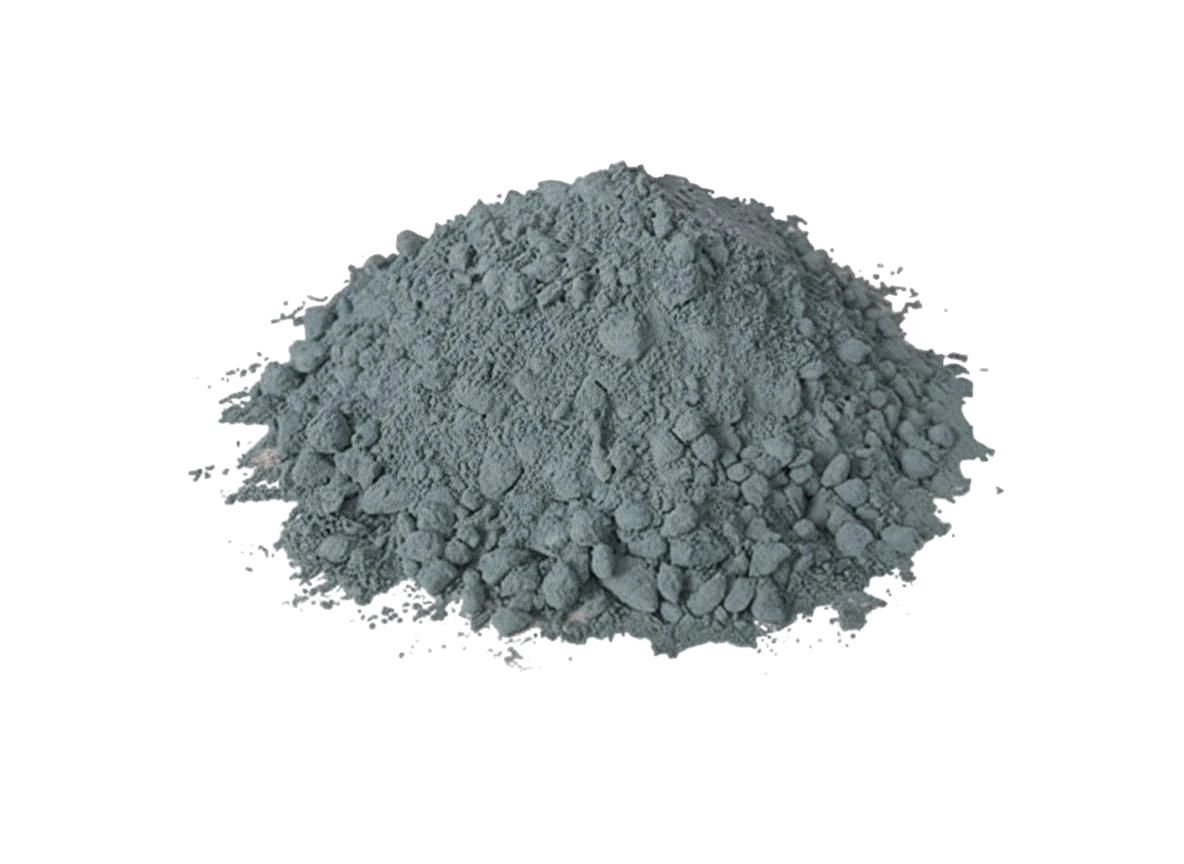
Low Cement Castable
(LCC) — High Alumina
Low Cement Castable (LCC) is a high-alumina monolithic refractory material engineered for cement rotary kiln lining. With CaO content below 2.5% and Al₂O₃ from 60–80%, LCC delivers superior hot strength, alkali resistance, and thermal shock stability versus conventional high-cement castables — without the porosity penalty of traditional formulations. Service temperature up to 1650°C. Five grades matched to kiln zone requirements.
LCC Grade Matrix — Five Grades, Full Parameters
Low Cement High-Alumina Castable — LCC Series
All five grades share the same low-cement formulation philosophy (CaO ≤ 2.5%) and are produced under the same ISO 9001 quality system. The VRF-LCC70 is the recommended general-purpose grade for cement kiln transition zones. Higher-alumina grades (LCC75/LCC80) are specified for nose rings and extreme-wear zones. All grades available in 25 kg moisture-resistant woven bags.
| Grade | Al₂O₃ (%) | CaO (%) | B.D. (g/cm³) | A.P. (%) | CCS 110°C (MPa) | CCS 1100°C (MPa) | RUL T₀.₆ (°C) | Water Add. (%) | Max Svc. Temp (°C) |
|---|---|---|---|---|---|---|---|---|---|
| VRF-LCC60 | ≥ 60 | ≤ 2.5 | 2.50–2.65 | ≤ 18 | ≥ 40 | ≥ 45 | ≥ 1350 | 5.5–6.5 | 1500 |
| VRF-LCC65 | ≥ 65 | ≤ 2.0 | 2.60–2.75 | ≤ 17 | ≥ 45 | ≥ 50 | ≥ 1400 | 5.0–6.0 | 1550 |
| VRF-LCC70 ★ Recommended | ≥ 70 | ≤ 1.5 | 2.70–2.85 | ≤ 16 | ≥ 50 | ≥ 55 | ≥ 1450 | 4.5–5.5 | 1580 |
| VRF-LCC75 | ≥ 75 | ≤ 1.5 | 2.80–2.95 | ≤ 15 | ≥ 55 | ≥ 60 | ≥ 1500 | 4.0–5.0 | 1620 |
| VRF-LCC80 | ≥ 80 | ≤ 1.0 | 2.90–3.00 | ≤ 14 | ≥ 60 | ≥ 65 | ≥ 1550 | 3.5–4.5 | 1650 |
B.D. = Bulk Density after 110°C drying · A.P. = Apparent Porosity · CCS = Cold Crushing Strength · RUL T₀.₆ = Refractoriness Under Load (0.6% deformation) · Water addition per grade; follow supplied Mixing & Curing Guide · ★ Highlighted grade is recommended for general cement kiln transition zones
LCC vs Conventional High-Cement Castable — Comparison
The performance advantage of LCC over conventional high-cement castable (HCC, CaO 8–15%) stems from the dramatically lower calcium aluminate binder content, which reduces porosity, eliminates calcium silicate phases at elevated temperatures, and improves resistance to alkali vapours — the primary attack mechanism in cement kilns.
| Property | Conventional HCC | LCC (VRF-LCC70) | Advantage |
|---|---|---|---|
| CaO Content | 8–15% | ≤ 1.5% | Less calcium silicate formation at temp |
| Apparent Porosity | 20–26% | ≤ 16% | Lower alkali infiltration |
| CCS after 1100°C | 25–35 MPa | ≥ 55 MPa | Retains hot strength |
| Max Service Temp | ~1350°C | 1580°C | Wider kiln zone coverage |
| Alkali Resistance | Moderate | High | Extended campaign life |
| Water Addition | 8–12% | 4.5–5.5% | Denser installation, less drying time |
LCC by Cement Kiln Zone
Preheater System
Cyclone bodies and riser ducts face moderate temperatures (600–900°C) but high alkali vapour concentrations. LCC60 provides cost-effective protection with strong alkali resistance.
Inlet Chamber
The inlet zone combines high temperatures (900–1100°C) with abrasion from meal flow and alkali vapour cycling. LCC65 balances wear resistance and thermal stability at this transitional zone.
Transition Zone
Between 1100–1350°C, the transition zone is the highest-volume castable application in a cement kiln. LCC70 is the industry workhorse for this zone — proven hot strength retention and consistent campaign life.
Nose Ring
The nose ring faces the most severe thermal cycling in the kiln — rapid temperature swings from clinker cooling air mixed with 1400°C+ flame radiation. LCC75 and LCC80 provide the thermal shock resistance and hot strength required.
Cooler & Discharge
Clinker cooler hoods and discharge chambers face abrasive clinker impact and thermal shock. LCC70 provides wear resistance and integrity under impact loading, with easier installation than brick alternatives.
Tertiary Air Duct
TADs carry dust-laden hot air at 800–1100°C. The combination of abrasion and moderate temperature makes LCC65 the reliable specification — lower cost than LCC70 without compromising service life in this zone.
Low Cement Castable FAQ
"Low cement" refers to the calcium aluminate cement (CAC) binder content — typically CaO below 2.5% in the fired product, compared with 8–15% in conventional high-cement castables. The lower binder content results in a denser microstructure after curing, reduced apparent porosity, and significantly improved hot strength. The trade-off is a narrower water addition window and a more critical dry-out schedule — both are managed by following the supplied Mixing & Curing Guide precisely.
VRF-LCC70 (Al₂O₃ ≥ 70%, CaO ≤ 1.5%) is the recommended grade for cement kiln transition zones operating at 1100–1350°C. It balances Al₂O₃ content, porosity, and hot strength at a cost-effective point. If your kiln operates closer to the burning zone boundary or experiences above-average alkali attack, specify VRF-LCC75. For nose rings and extreme-wear zones above 1400°C, VRF-LCC80 is the appropriate specification. If you are unsure, share your kiln diameter, zone temperatures, and current lining details — we will confirm the right grade.
Dry-out schedule is critical for all castables, and especially so for LCC. Because LCC has a denser, lower-porosity matrix, trapped steam from too-rapid temperature ramp can cause explosive spalling. The recommended dry-out approach is a slow ramp from ambient to 110°C held for 4–8 hours to drive free moisture, then a second hold at 350°C before proceeding to operating temperature. Rate of rise should not exceed 30–50°C/hour in the critical 80–300°C range. The Mixing & Curing Guide supplied with each shipment specifies the exact recommended heat-up schedule for each grade.
Minimum order quantity is 5 tonnes per grade. LCC is packed in 25 kg moisture-resistant woven polypropylene bags with inner PE liner, palletised on wooden export pallets. A 20-foot general-purpose container loads approximately 22 tonnes. For trial orders below MOQ, a sample evaluation can be arranged — contact us with your application details and we will advise. Lead time from order confirmation to FOB Qingdao is typically 3–4 weeks for standard grades.
Every shipment is accompanied by a batch-specific Certificate of Analysis (COA) showing actual tested values for the key parameters in the grade matrix, a Technical Data Sheet (TDS) for the grade ordered, an MSDS / SDS, and a Mixing & Curing Guide in English. Third-party inspection (SGS, Bureau Veritas, Intertek) can be arranged at the production facility before shipment — available for orders of 5+ tonnes.
Get a Proposal for Low Cement Castable
Specify your kiln zone, grade of interest, and quantity. Our technical team responds within 1 business day with pricing, lead time, and a batch COA for the relevant grade.